Chapter 691 Electric Dragonfly Project
Our goals:
■ Attract and introduce young people to aviation
■ Create Science, Technology, Engineering, and Math (STEM) activities for students
■ Teach aircraft building skills
■ Build an electric experimental aircraft to race in the Pulitzer Electric Aircraft Race
Why An Electric Airplane?
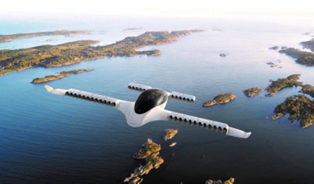
■ Electric aircraft are the planes of the future.
■ They will be more environmentally friendly, produce less green house gases, will be quieter, and produce less environmental waste.
■ They offer propulsion efficiencies that ICE engines can’t.
■ They offer aerodynamic improvements that current aircraft can’t.
■ They will be more reliable and require less maintenance than current aircraft.
■ They will cost less to operate.
Dragonfly Project Description
Who: EAA Chapter 691
What: Building an electric experimental aircraft
Where: The Los Alamos Airport
When: Started in 2022
Why: To get young people interested in aviation and STEM
How: Convert an existing high performance experimental aircraft to use an electric propulsion system.
Electric Dragonfly Description
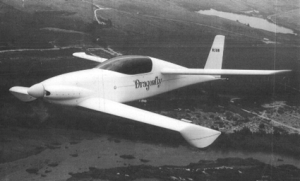
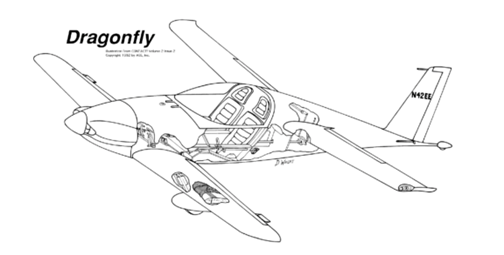
■ Tandem wing design
■ Canard
■ Wing
■ Gross weight-1200 lbs
■ Empty weight – 530 lbs (w/o battery)
■ 40 kw-hr battery weight – 440 lbs
■ 20 kw-hr battery weight – 220 lbs
■ Maximum speed –
200 mph at 10,000’ msl @85kw
■ Cruise speed – 150 mph@50 kw
■ Economy Cruise – 120 mph@30kw
■ Stall speed – 65 mph
■ Maximum Range – 150 miles
■ Service ceiling – 20,000 ft
Electric Dragonfly Project Update
Go to July 2023 – May 2024 – September 2024 –June 2025 – July 2025 – September 2025 – October 2025 – November 2025
2022 – The beginnings
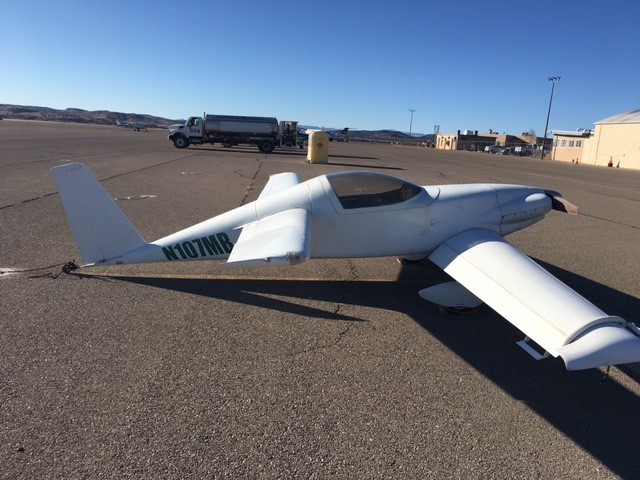
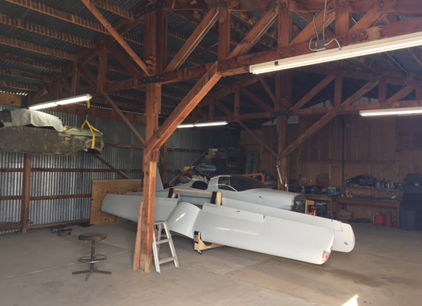
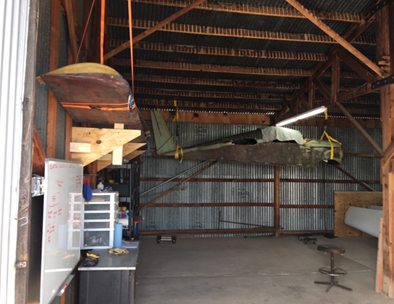
We had hangar space in Los Alamos, a Dragonfly airframe for development, and some experts on building experimental airplanes to kick this project off. Three Dragonfly airframes were donated to the Chapter:
■ N107MB (MK-1.5), SN#508, TT 700 hrs
■ N64TM (MK-2), SN#958, TT 860 hrs
■ Womack Dragonfly, MK-2-unfinished
Read about what it took to make it happen in the newsletters for March 2022 , July 2022 and August 2022.
July 2023
We are meeting on Saturdays to work on the Electric Dragonfly. Skip has been making great progress on the canopy. It is back on the hinges and he is doing the final fitting. We have also been reattaching the elevator and aileron controls after overhauling them and then setting their travel to specifications. We recently found that the control stops for the ailerons weren’t doing their job so we are building new and improved ones.
May 2024
The Electric Dragonfly airframe is close to being airworthy again. Control stops have been built and installed for the ailerons. The aileron trim needs to be repaired and reinstalled. Preliminary rigging is complete. Wheel pants and strut fairings need to be rebuilt. Now that it is finally warming up we we can begin work on it again. Our next hurdle is raising funds for the electric propulsion system. We estimate that it will cost between $35k to $50k depending on the motor, inverter, and battery selected. We plan to seek sponsorship once we get our 501c3 application processed by the IRS.
September 2024
Substantial progress has been made on a number of issues with the Dragonfly airframe but more work is needed.
■ The canopy was damaged during moving and was rebuilt.
■ The fuel header tank had a leak that was repaired.
■ Control pushrods were improperly constructed and new ones were built.
■ Control stops were missing or did not work properly and new ones built and installed.
■ The control rigging does not match the specifications in the plans so the
controls are being rerigged.
■ There is some water damage due to leaks around the boot cowl inspection
cover and the turtle deck cover that need to be repaired.
■ There is thermal damage to the bottom of canard skin due to the close
proximity of the exhaust pipes that needs to be repaired.
■ The fairings on the main gear legs are damaged and need to be rebuilt.
Accurate Dragonfly Performance Data Is Needed
■ There is considerable scatter in the performance data that has been published by various Dragonfly builders and pilots.
■ Analysis indicates that the flat plate drag can vary considerably from one plane to the next. This could be due to rigging and/or builder errors. It could also be due to the fact that engine output power is not well known on many of these aircraft given the experimental nature of the engines used. These factors make it difficult to design an optimized electric propulsion system.
■ As a result, we are considering installing a reliable and well characterized aircraft engine such as a Rotax 912 or Continental O-200 as an intermediate step to evaluate the Dragonfly performance and provide input to the electric propulsion design.
June 2025
We had a successful startup of the VW Revmaster engine and a weight and balance check. We were even lucky enough to have some Young Eagles show up again. There is a logbook so we can start to keep track of all the hands that have had a chance to work on this project, so next time you’re at the hangar to do some work, please jot your name down. At the end of the day we can also record what we got done which should be fun to look back on when we get this up and flying.


July 2025
We’re making great headway on the Dragonfly project. Our biggest focus was the continuation of dismantling N107MB. Along with that was understanding the characteristics of the aircraft as-is so we can make our game plan on how to proceed.
Weight and Balance
Another? Well, yes, and trust me, there will be many many more to come. This time, we took measurements with a single pilot and a second with a copilot. Being very thorough with the data helps us understand exactly what we’re working with.

(Andy McMath in the pilot seat)
Removal of the Revmaster engine and modules
We removed the old engine and cleaned it up to be sold. All the modules will come with it, but we will retain anything related to the pitot-static system. The wiring has been quite challenging, as we had to figure out what each component does and there seem to be numerous add-ons and changes throughout its history. However most, if not all, of these components will be replaced with a more modern and tidier setup.

(Will Fox and Roger Smith preparing the Revmaster for removal)


(Wiring to be removed and replaced)
Vertical CG
More weight and balance calculations were performed to determine the vertical CG and compare it to the thrust line. Ideally, the thrust line should pass directly through the CG. This data will be useful when placing the Rotax engine, but there will be many other factors to consider. Components like the cooling radiators, oil reservoir, or exhaust system can obstruct the engine’s placement for optimal thrust. Our goal is to achieve the closest possible placement for optimal stability.

Planning the Panel
As we continue to remove components from the old panel, it’s time to begin exploring our options. Since all possibilities are currently on the table, nothing will be excluded from consideration. Our key factors to consider include weight, space, data display, and cost, among others. Additionally, we must also determine how to integrate these systems into the eventual electric motor.
Initially, we used a Garmin glass panel layout and employed “paper dolls” for placement. This approach facilitated the easy placement of all the ideal components. In the coming weeks, we will conduct further test layouts before finalizing a specific platform.

(Layout of Garmin G3X, engine monitor, EFIS, etc)
September 2025
Skip really wanted to do a taxi test… With the completion of the characterization of full weight and balance and center of gravity calculations, the project is entering the building phase. The current initial step is to remove the canard and do the fiberglass repairs on its underside. On the weekend of Sept 6th, Owen Denning unbolted and removed the elevator controls and the canard attach bolts. Thanks Owen! Good work! With the canard free, the fuselage was lifted and the canard moved up to Roger Smith’s hanger for the fiberglass work. Moving the canard, Skip really wanted to see how well his pickup truck might fly. OK, at least let me do a taxi test! Well, saner minds prevailed and the canard was safely placed in Roger’s hanger. Initial assessment shows foam degradation on the center bottom of the structure, but the primary structural elements all seem untouched. The plan is to replace foam and re-glass the damaged part. Then a cleanup and glassing of the gear legs and wheel pants support structures should give a nicely complete canard.

October 2025
Rotax Engine Mount Design
The Rotax 912 engine that will be installed on the Dragonfly weighs less
than the Revmaster engine it is replacing and has a different weight distribution as well. This must be taken into account when designing the new engine mount to make sure that the empty weight and balance of the Dragonfly is correct.


Canard Repair
The Dragonfly canard was damaged by the heat from the exhaust pipes that were routed underneath it. That damage needed to be assessed and a proper repair done on it. Additionally the nylon brake lines need to be replaced and new
more streamline wheel pants need to be installed. The main gear strut fairing is also being covered with fiberglass to make it more stream line and durable. We are also considering replacing the brakes with ones that don’t require removal of the wheels in order to change the brake pads.


Instrument Panel Design
The Dragonfly panel is being redesigned for easy removal and accessibility and a modern glass panel will take its place. Various concepts for the new panel are being considered and mocked up. The original panel used analog gauges and the new ones will be electronic. The new panel will also have ADS-B in and out as well as a mount for an iPhone or iPad and charging ports.


Fuselage Repair
A new canopy has been installed on the Dragonfly and the canopy frame is being sanded smooth. New latches will be built to make the canopy seal better and to make access easier. There was some water intrusion into the fuselage while the aircraft was parked on the ramp and the rain got in, so the damaged surfaces are being repaired and sealed.


The fuselage will be put on a rotisserie so it can be rotated easily to work on all sides.


November 2025
We have had a warm summer and fall here in Los Alamos, and that has allowed us to work on the Dragonfly project much longer than we expected. We have gotten a lot more done than I expected. Participation has been great in the build sessions with an average team of three to four members attending over the past several months. However it is starting to get cold even in the afternoons and too cold to do fiberglass work so we are not going to have any more “organized” build sessions until the spring.
We are waiting on parts like brakes and wheels, fasteners, and tubing that will limit further progress for a while. As the parts come in we should be able to complete some of the fabrication activities and we plan to have a few impromptu build sessions during the winter to do assembly. We will announce those sessions so folks can come out to help put the plane back together.
Rotax Engine Mount Design
The Rotax engine mount will incorporate 4 rubber vibration isolators that will be mounted between the Rotax Ring Mount (the white object in the lower right picture) and the firewall mount (the yellow engine mount in the lower left picture is an example). The Isolators were ordered as a kit from Sonex which contains weld rings that will be welded to the Firewall Mount which is now being designed.

Fuselage Repair
Sanding of the canopy frame is making real progress and after discovering and repairing some bridging of the top fiberglass lamina it is starting to look pretty good. The next step will be to put one or two more coats of epoxy and glass beads on then sand to a final finish and it should be ready for paint. There is a slight lip where the canopy frame meets the boot cowl in the corners so we will be using a mixture of epoxy and glass beads to build up the area on the boot cowl and fair it in nicely with the canopy frame. However, it is getting too cold to work in an unheated hangar so that will have to wait until spring.

Canard Repair

Repair of the Canard is going nicely thanks to Roger’s efforts. The center section has been closed up, sanded, and painted. The strut fairings have been fiber-glassed, replacing the 100 mph white tape that had been there before. The 3/16” nylon brake lines are being replaced. The Jame’s split wheel pants are in and fitting them to the strut and tire will begin as soon as we get the new brakes and wheels. Actual alignment and mounting of the fairings will take place once the canard is back on the plane.
